Monday, January 11, 2010

GOD AND INTERVENTIONS


I recently read a new novel by a friend who has strong evangelical convictions.
I thought of that novel as I wrote my previous blog "the Battle of the Books".
Once again I have the feeling of a situation that is inexplicable to me.
Below I have posted my book notes, which I shared with the author. She elected to blog the crucial portion of it and, more important, to provide her answer to what I consider to be inexplicable.
http://members.authorsguild.net/shannonvan/blog.htm
As I re-read her blog I see once again that the answer she provides is based on a book. In this case the Bible.

"Van Roekel, Shannon. Desert Fire 2009.

A contemporary novel of the genocide taking place in Darfur. It is vivid in its depiction of the death, pain and suffering of the villagers of the region and preachingly seems to say that the prayers of the evangelicals who talk with God "is obviously our best recourse" [author's note"].

It is short on politics [oil is mentioned only once] and on regional separatism [Southern Sudan not mentioned] neither of which are within the scope of the novel. A clever story line deftly unfolds as a young woman journalist gains entry to the region and finds friendship, daily Christian charity in action, love of a good man, and finally faith for herself.

For me, more than the suspense of the story line, was the suspense of how the author would reconcile the evil of the genocide and the pain of the faithful with the religious underpinnings of an all powerful, just, and loving God. Recourse to prayer occurs frequently in the story and seems to imply that God is unaware of events and unwilling or unable to intervene to prevent the horror of genocide.

The novel is certainly ambitious seemingly aimed at two irreconcilable beliefs. One is that indescribable, deliberate, preventable horror of pain and death can exist. The other is that that an all-powerful and all knowing God that "so loved the world…" exists yet chooses not to intervene.

Shannon can certainly create and sustain an intriguing story line."

Saturday, January 9, 2010

BATTLE OF THE BOOKS


S. P. Huntington, in his oft quoted book The Clash of Civilizations, discussed at some length the potential clash of civilizations between Muslims and the rest of the world.

Recent acts of terrorism and the response of increased security at airports renews the discussion. In particular terrorist acts are typically ascribed to what, for want of a better term, I will call "Militant Muslim Jehadist". By this I refer to those prepared to undertake certain death in order to kill others who do not share their belief. This is not to imply that all terrorist acts committed by Arabs or Muslims fall into this definition, as some may be motivated by politics rather than religion.

I focus attention on those who are indeed motivated primarily by religious conviction.
My argument is that in undertaking an assignment that is certain to end in their death they must believe that they will find a reward in paradise or heaven that is more to be desired than continuing with their life.

Many Muslims have disassociated themselves with that view, do not support militant Jehads or terrorist acts, and sometimes assert that it is contrary to the Qur'an and the religion. What I do not find is any assertion that there is no heaven and there is no paradise beyond death. Why is that?

I suggest that it is because the Qur'an is full of references to paradise or heaven.

Similarly I do not find criticisms of militant jehad from the Western world in terms that clearly say "there is no reward, there is no heaven and there is no paradise".
Why is that? I do find criticism in terms of "you will not be rewarded with virgins" or "you will not qualify for paradise".

Note in particular that both sides seem to accept the existence of a heaven or paradise. They differ as to what life in paradise will hold and what qualifications are necessary for admission.

Now for my main point.
On one side we have those who say, "I know there is a paradise and what life there will be like because it is written in my holy book the Qur'an".

On the other side we have those who say, "I know there is a heaven and what life there will be like because it is written in my holy book The Bible".

It seems that life and death actions have been taken in the past, are being taken now, and are likely to continue to be taken in the future based primarily on which book you choose to believe and on how you interpret what you read in that book.

That, to me, is inexplicable.

Thursday, January 7, 2010

A VALID ROLE OF GOVERNMENT


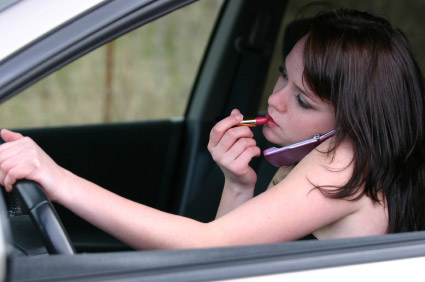
At last our province has enacted legislation banning the use of hand held devices while driving. A good first step but too timid.

The evidence is clear, the use of cell phones increases accident rates. Further the increase in accident rates is equally high for hands free cell phone use.

Yes there are other things that increase accident rates, but this is one identifiable cause that can be dealt with.

Cell phone use by others on the road endangers by life and it endangers your life.

It is the proper role of government to act to protect innocent citizens from the willful acts of others.

We have a law requiring seat belts. While that is a good idea, I really don't need a law to protect me from me.

Enforcement of the seat belt law has been reasonably easy and compliance is high.
Enforcement of cell phone use is even easier as evidence exists in the cell phone log.

This is not an inappropriate restriction on personal freedom. It is a restriction aimed at protecting individuals from the actions of others.

Wednesday, January 6, 2010

Profiling is good


Political correctness is relegating the term "profiling" to the unacceptable bin.
For me, profiling is an essential aspect of life. When I approach the check out counters at the supermarket I profile in terms of length of the lines and fullness of the carts before I make my choice. I profile restaurants in terms of my past experience with the food and with the service and sometimes I add to my profile the opinion of my friends. The really helpful aspect of thinking in terms of profiling is that it leads me to evaluate whether my profiling terms continue to be helpful, to discard unhelpful characteristics and perhaps add new ones.

Recent terrorist activities and heightened security at airports should indeed call for an examination of the terms of profiling. If characteristics such as luggage or no luggage, age, sex, ticket purchased with cash or with credit card, originating airport, color of hair, or dare I say religion or race are found to correlate with attempts at terrorist acts then such profiling should logically be linked to the level of security inspection.

It is a waste of time and money doing a 100% inspection of everyone. The focus of attention should be on those who have characteristics associated with risk. Of course debate should continue with respect to the characteristics that are used. In the case of airport screening it is entirely possible that a different set of characteristics will be employed in different countries or even at different airports.

Now think of the roadside stops during holiday weekends in which the police are concerned primarily with inebriation. Is it fair to be more suspicious of muscle cars, adjacency to pubs, odor of alcohol, bleary eyes, nervousness, odor of marijuana, youths, and noisy passengers? I think yes.

What is needed now is a more vigorous debate on the profiles that are used. When someone berates the use of race (or religion or age or……) X in profiling then the appropriate question is " What is the evidence that race X has a proportionally higher probability of exhibiting behavior Y?"

Tuesday, January 5, 2010

THE CASE OF THE MISPLACED i


When I learned that mixed marital art was coming to my city I was delighted. I put it high on my list of events to attend.

Over the centuries this art has flourished. It has varied over time and with diverse cultural practices. Books have been written and books have been banned. Performers have been feted and faulted. It is one of the worlds enduring arts which is strange when you consider that public performances are and have been relatively rare.

Perhaps it is this very rarity which gives the flavor of mystery as if we never quite know whether there is more to it than we have yet experienced. That too may account for the fact that it is not considered part of the normal educational curriculum such as music, and traditional art. The very word art conjures up paints and brushes pencils and easels. Even digital camera art requires the explanatory phrasing.

I am looking forward to the performance. Undoubtedly I would have enjoyed such performances more in my more youthful days. Still I have a vivid imagination and an ever present urge to learn new things. In my minds eye I can imagine the skill, artistry, exuberance and the sheer pleasure of the couples. To see the lithe and youthful participants demonstrating the finer points of their art will be both educational and stimulating. Perhaps some of them give private lessons as do the musicians in the symphony.

What a let down it was to find that my anticipation and my vivid imagination had been tricked by my atrocious spelling. It is mixed martial art coming to my city. The strokes are to be blows, the holds are to be painful and the audience is to be impressed with the pain inflicted and the physical carnage of the maxi muscled participants.

Strange how there are such vastly different views of what is obscene.
Strange the types of performance that our city council views as acceptable.
Strange how audiences are stimulated in different ways by violence and by passion.

Monday, January 4, 2010

Knowledge or belief?


Our local philosophers café will soon have an evening discussing "What do you really know and how do you know it?

I am more comfortable thinking in terms of what I believe rather than what I know.
This has some advantages to me.

No one can say I am wrong when I tell them my belief. They have no way of "knowing" what my beliefs are. I would like to thus nudge them into a query "what is the basis of your belief?" or into an invitation to dialoge, "my belief is different and is based on…".

It compels me to think of my beliefs as subject to modification as I encounter other beliefs, new sources of information, or alternative modes of analysis.

It calls on me to examine the basis of my beliefs. In most cases I come face to face with the fact that most of my beliefs are based on second hand information and that information can be updated or other sources consulted. It is also possible that my reasoning may be faulty.

Most important it leads me to realize that while direct experience and observation are important they provide a very time and space limit to the information I use in formulating my beliefs. Most of the information that leads to my belief is second hand. It is the beliefs of my parents, of my teachers, of my contemporaries, of the books and newspapers I read, of the television I watch, of the radio I listen to, and of the web that I scan.

With this realization it becomes apparent that my "education" consists largely of learning to evaluate second hand information, blend it in with my own direct experience, process it through my critical faculties, and form tentative beliefs. I use the term tentative to emphasize that my beliefs are not set and unalterable but are amenable to modification. This is consistent with the scientific method which leaves all conclusions tentative and subject to refutation and modification.

Personal responsibility is a central core of this view. I am responsible for the information that I gather directly or from secondary sources. I am responsible for the manner in which I filter, confirm, and process the information to form my beliefs. I am responsible for when, where and to whom I express my beliefs.

Saturday, January 2, 2010

Personal freedom, role of government, and raw milk


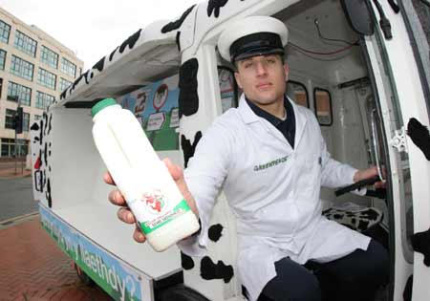
Taxpayers money is being spend by the Fraser Health Region of British Columbia to prevent farmers from selling raw milk and thereby preventing consumers from doing what they might want to choose.

Personal freedom to make choices is of primary importance to me. Yes, I must be subject to penalties if the actions I take based on my choice cause identifiable damage to others.

A proper role of government is to provide unbiased and relevant information to assist individuals in making decisions as to personal action which may endanger the individual or society. It is not the proper role of government to prevent me from making what the government may regard as a mistake.

Our health region is alleging that the dangers from raw milk are sufficient to justify its prohibition. I have yet to see them publish the data supporting that opinion.

Here is my experience.
I was raised as a child in small town rural Saskatchewan in the 1930's. We had no electricity and limited refrigeration. A local farmer delivered unpasteurized milk to us daily. We had a kerosene refrigerator. Others in the town may have had some ice from the ice house or nothing more than a cool cupboard. I do not know of a single instance of health problems arising from the milk. Similarly in the 1970's living in Kenya we bought unpasteurized milk daily from a local farmer. Throughout the 1980's and 1990's on extended visits in France we drank unpasteurized milk and ate cheese from unpasteurized milk.

In my view here are some valid roles for government agencies both in general and for the particular case of raw milk.

-publish data on the risks of raw milk in general.
-publish data on the risks of raw milk in our geographic region. Similarly publish data on the risk of dining in fast food restaurants.
[Note that use of the internet reduces the cost of publication to virtually zero]
-publish data on the outcome of legal suits launched against distributors of raw milk on the basis of distributing products which resulted in damage. Note that this requires proof of directly related damage to identified individuals by identified distributors.
-inspect all food producing establishments as to sanitary standards, e.g. as for restaurants and for safety of raw materials, e.g. cattle for mad cow and dairy cattle for TB. Further to shut them down is standards are not met.
-require labeling of raw milk as is done for cigarettes.
-require an annual surcharge on Medical Service Plan premiums for those who are consuming raw milk. A similar surcharge should be levied on those who smoke. Here the purpose is to compensate society for any additional costs imposed by the results of risky personal decisions. Note that life insurance companies are able to charge higher premiums on those who smoke and yet do not do so for those who drink raw milk.
-require that I directly pay for any medical or hospital costs arising from my consumption of raw milk.
-
The present stance of the Fraser Health authority simply supports the existing milk cartel and the financial health of the legal industry.